Trump Attacks Zelensky Again: Apparently, Defending Your Country Is the Real Problem
After striking a controversial diesel deal with Vladimir Putin, Donald Trump has turned his frustration toward Ukraine’s president, demanding new leadership and warning Kyiv against attacking Russian oil infrastructure. The timing raises an uncomfortable question: whose interests are being prioritized?


Just when you thought Donald Trump’s approach to the war in Ukraine couldn’t become any more peculiar, the American president has found a new target for his frustration: Volodymyr Zelensky, the man leading a country that Russia invaded.
On October 10, 2026, Trump suggested that Ukraine should replace its president, accused Zelensky of failing to end the war, and demanded that Ukrainian forces stop attacking Russian oil refineries.
Apparently, in Trump’s diplomatic universe, the real problem isn’t necessarily the country launching the invasion. It’s the country refusing to make peace on terms it considers unacceptable.
And the timing? Quite remarkable.
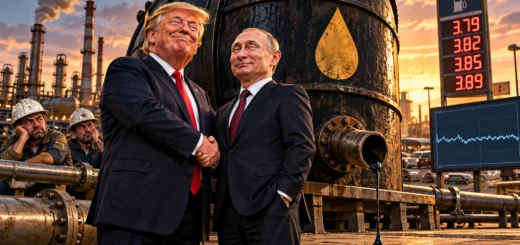
Just one day earlier, Trump announced an agreement with Vladimir Putin to allow Russian diesel onto international markets, easing sanctions pressure on Moscow while attempting to address high American fuel prices.
“Get a New President”: Trump’s Latest Advice to Ukraine
Speaking to reporters at the White House on Saturday, Trump declared:
“I suggest they get a new leader who can make a deal.”
He then went further:
“I think it’s time for Ukraine to get a new president.”
Trump also claimed that Zelensky had numerous opportunities to end the war but repeatedly refused them.
And when discussing Ukrainian strikes against Russian oil infrastructure, the president delivered another warning:
“He better damn well stop.”
These remarks were reported by the Associated Press, Axios, Deutsche Welle, and Ukrainian media.
There is something extraordinary about the president of the United States publicly suggesting that a wartime democratic ally needs different leadership immediately after reaching an energy agreement with that ally’s aggressor.
One might ordinarily expect diplomatic pressure to focus primarily on the government that initiated the invasion. Trump’s comments instead placed considerable responsibility on Kyiv.
Of course, negotiations require compromise, and Trump argues that Zelensky has missed opportunities for peace. But saying a deal was possible is not the same as demonstrating that Russia offered a credible, enforceable agreement capable of protecting Ukraine’s sovereignty.
That distinction matters enormously.
The Diesel Deal: Suddenly, Russian Refineries Are Off-Limits
Here is where the situation becomes particularly interesting.
Ukraine has been targeting Russian oil infrastructure as part of its strategy to weaken Moscow’s ability to finance and sustain its military operations.
Trump, however, is concerned about the impact of these strikes on global diesel supplies and American fuel prices.
His administration’s agreement with Putin is intended to increase Russian diesel exports and relieve pressure on fuel markets.
From Washington’s perspective, protecting consumers from rising energy costs is a legitimate economic concern.
From Kyiv’s perspective, however, allowing Russia to earn additional energy revenue while demanding that Ukraine stop attacking Russian refineries creates a serious strategic contradiction.
Zelensky made that concern explicit, describing the decision to permit Russian petroleum exports as:
“An investment in a war that must be ended.”
He also characterized the move as a weak decision by powerful partners.
Think about the logic being presented to Ukraine.
Russia can continue its invasion, Russian energy exports can receive sanctions relief, but Ukraine should avoid damaging infrastructure that supplies revenue to the Russian economy.
For Ukrainians who have endured years of attacks, displacement, and destruction, that is hardly an attractive diplomatic proposition.
And it becomes even harder to accept when the American president responds to their objections by suggesting their president should be replaced.
Meanwhile, Russia Continues Its Attacks
While Trump was publicly criticizing Zelensky, Russian attacks on Ukrainian cities continued.
On October 10, a Russian strike on Zaporizhzhia reportedly killed 20 civilians, including children. Other attacks across Ukraine added to the mounting civilian toll.
At the same time, Washington was demanding restraint from Ukrainian forces targeting Russian energy facilities.
The contrast is difficult to ignore.
Ukraine is being pressured to limit attacks on infrastructure that supports Russia’s economy, while Moscow continues conducting deadly strikes inside Ukraine.
There is a legitimate debate over whether attacking energy infrastructure increases global economic instability. But that debate cannot be separated from the reality that Russia launched the full-scale invasion in February 2022.
A peace agreement must address both the immediate violence and the conditions that would prevent another invasion.
Simply demanding that Zelensky sign a deal does not resolve those questions.
Trump’s Numbers Don’t Add Up
Trump’s remarks also included sweeping claims about Ukrainian territorial losses and casualties.
He suggested Ukraine had lost 30% of its territory and claimed more than two million people had been killed in the conflict.
Those numbers deserve scrutiny.
Independent estimates place Russian control at roughly 20% of Ukrainian territory, significantly below Trump’s figure. His casualty statement also blurred the distinction between people killed and total military casualties, which can include wounded personnel.
Reliable casualty figures remain difficult to establish, but his specific claims should not be treated as verified facts.
Trump also repeated his familiar assertion that Russia’s invasion would never have happened had he been president in 2022.
It is an attractive political talking point because it asks the audience to accept an alternate history that cannot be tested.
Actual diplomacy, unfortunately, requires more than confidence about events that never occurred.
Ukraine’s President Is for Ukrainians to Decide
Ukraine’s foreign minister, Andrii Sybiha, responded to Trump’s demand for new leadership by emphasizing that Zelensky leads Ukraine during its struggle for independence and that Ukrainians have the right to determine their own government.
That is an essential principle.
Ukraine’s wartime restrictions and delayed elections raise legitimate democratic questions. But neither those questions nor disagreements over peace negotiations give another country’s president the authority to select Ukraine’s leadership.
Washington can advocate negotiations, attach conditions to assistance, or disagree with Kyiv’s military strategy.
Deciding who should govern Ukraine is a different matter entirely.
Peace Cannot Simply Mean Giving Putin What He Wants
There is a serious argument in favor of Trump’s stated goal of ending the war through negotiation. Continued fighting carries enormous human and economic costs, and diplomacy remains necessary.
The central disagreement concerns the terms of a settlement.
Russia has insisted on territorial concessions that Ukraine regards as unacceptable. Kyiv and its European partners have emphasized the need for meaningful security guarantees.
Without such guarantees, a ceasefire could freeze the conflict rather than resolve its causes.
The diesel agreement complicates that diplomatic picture by potentially increasing Russian energy revenue while reducing a source of pressure on Moscow.
Whether the agreement succeeds in lowering American fuel prices remains to be seen. Whether it contributes to a durable peace is an entirely separate question.
And threatening Zelensky’s political position does little to answer either one.
The Bottom Line: Diplomacy Requires More Than Demands
Trump’s October 10 remarks reveal a fundamental tension in his approach to the war.
He wants lower fuel prices, fewer disruptions to energy markets, and a negotiated settlement. Those objectives are understandable.
But Ukraine wants security, sovereignty, and assurances that a peace agreement will not simply provide Russia with an opportunity to regroup.
Both sets of concerns require serious negotiation.
Calling for Zelensky’s replacement while making commercial arrangements with Putin risks convincing Ukrainians that their security is becoming secondary to American domestic economic priorities.
For a president who repeatedly promises to end wars through dealmaking, the challenge is not merely getting signatures onto a document.
It is producing an agreement that can survive after the cameras leave.
Peace is not measured by how quickly a deal is announced. It is measured by whether the fighting stops, sovereignty is respected, and the agreement holds.
Until those conditions are addressed, attacking Zelensky for refusing an unspecified deal is no substitute for a credible peace strategy.
Reporting and further reading